
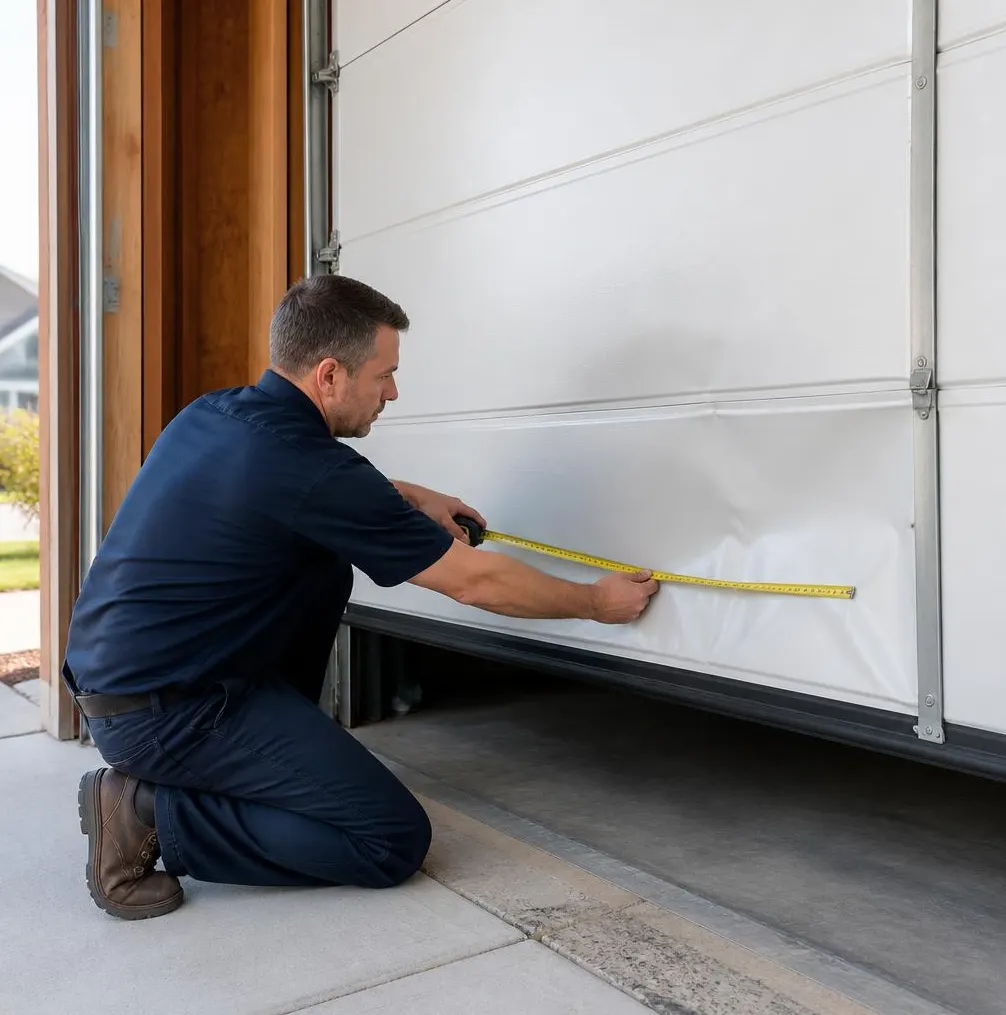
What a Technician Sees This Time of Year
Once the afternoon downpours start to taper off and the nights get a little cooler, we start getting a predictable run of calls. A homeowner notices the garage door is suddenly harder to open by hand, or it closes crooked, or the opener grinds for a second before it catches. Almost every time, the cause traces back to what the door just went through over the summer: months of heat, humidity, and hurricane-season storms that swelled the wood or metal, loosened hardware, and left grit in the tracks. As the air dries out and temperatures drop at night, those stressed parts shift again, and problems that were hiding suddenly show up.
Winter in this part of Florida isn't about snow or ice, but the shift matters for a garage door. Cooler nights and drier air change how wood panels, weatherstripping, and metal components fit together compared to peak summer. A door that was sluggish all August from swelling can suddenly feel loose or rattle as things contract. This is the window to catch small issues before they turn into a stuck door or a snapped spring on a cold morning.
Check the Weatherstripping and Seals
After a summer of heavy rain and humidity, the rubber seal along the bottom of the door and the weatherstripping around the frame often take a beating. Look for seals that are cracked, flattened, or pulling away from the track. Signs you need new weatherstripping include:
- Daylight visible under the closed door
- Water staining on the garage floor near the edges after a storm
- A draft or musty smell inside the garage
- Seals that feel stiff or brittle instead of flexible
Replacing worn seals now, before the drier winter air makes rubber even more brittle, helps keep out dust, pests, and any leftover moisture working its way into stored items or a finished garage space.
Listen for Changes in the Springs
Garage door springs do the heavy lifting, and they're sensitive to temperature swings. A spring that was stretched thin from working overtime in summer heat can behave differently as nights cool down. Watch for:
- The door feeling noticeably heavier when lifted manually
- The opener straining or reversing partway through a cycle
- A visible gap in a torsion spring, or one coil overlapping another
- A loud bang from the garage, which is often a spring finally giving out
Springs are rated for a certain number of cycles, and a summer full of extra opener use (storm prep, running the AC with frequent trips in and out) can shorten that lifespan. If a spring looks stretched, rusted, or uneven side-to-side, it's worth having it inspected rather than waiting for it to fail during an early morning commute.
Clean and Test the Opener and Sensors
Afternoon downpours all summer mean a lot of moisture and debris near the base of the door, right where the safety sensors sit. A thin film of grime or a spiderweb across a sensor eye is enough to make the door refuse to close, or reverse unexpectedly. Before winter settles in:
- Wipe down both sensor lenses with a soft, dry cloth
- Make sure they're aligned and both lights are steady, not blinking
- Test the auto-reverse by placing a block in the door's path
- Replace batteries in remotes and keypads, since humidity can corrode terminals over time
If the opener has been chattering, hesitating, or running louder than usual, that's often an early sign of a worn gear or a motor working harder than it should, both of which are easier to fix on your schedule than on an emergency call.
Inspect Hardware for Rust and Looseness
Homes closer to the coast deal with salt air on top of everyday humidity, and that combination accelerates rust on hinges, rollers, and track brackets. Even further inland, months of moisture can loosen bolts and let rollers wear unevenly. Walk the full length of both tracks and check:
- Hinges and rollers for rust streaks or stiff movement
- Track brackets for loose bolts, especially near the top where wind load from storm season puts the most stress
- The bottom bracket and cables for fraying or corrosion
A little machine oil on hinges and rollers (never on the track itself) goes a long way toward smoother, quieter operation through the cooler months.
Give the Door a Full Visual Once-Over
Step back and look at the door as a whole with the garage closed. Check for warping along the panels, especially on wood or composite doors that may have absorbed moisture over the summer. A door that no longer sits flush, or one with a visible bow, won't seal properly and puts extra strain on the opener and springs trying to force it into alignment.
When to Call Poinciana Garage Door
If you're hearing grinding, seeing a sagging spring, or your door just doesn't feel right after a summer of heavy use, it's time to get it looked at rather than wait for a full breakdown. Poinciana Garage Door handles seasonal garage door maintenance and spring replacement for homeowners throughout the area, checking tension, hardware, alignment, and the opener in one visit. If something's already failed, our emergency garage door service means you're not stuck waiting days for a repair.
Ready to get your garage door squared away before the cooler months settle in? Call Poinciana Garage Door today to schedule a maintenance visit anywhere in Poinciana, FL and the surrounding area.