
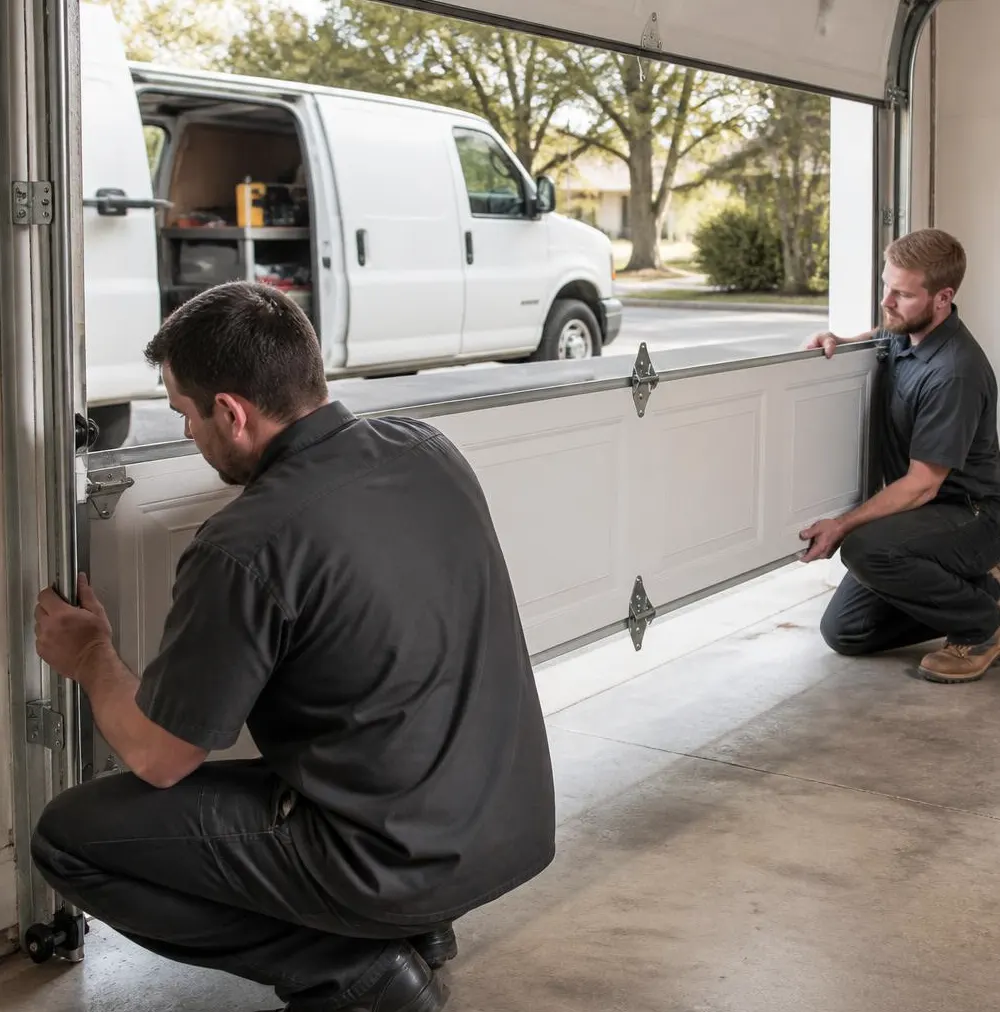
What Another Season of Putting This Off Actually Costs
Every storm season that passes without a real inspection is a bet. Most of the time you win it — the wind stays moderate, the door holds, nothing happens. But when a storm does bring sustained high wind to Poinciana, an unreinforced or worn-out garage door is one of the most likely parts of a house to fail first. And when it fails, the damage usually isn't limited to the door. Once wind gets inside a garage, it pushes up on the roof from underneath and out on the walls from inside, which is how a single failed garage door turns into a torn-off roof, blown-out windows, or a collapsed interior wall. Replacing a door after that happens costs far more than reinforcing one before it does, and the homeowner's insurance conversation gets a lot harder too.
Why the Garage Door Is the Weakest Wall in the House
Think about the openings in a typical house: a front door is a few square feet, a window is smaller still. A garage door is often 16 to 18 feet wide and 7 feet tall — by far the largest unsupported opening in the exterior envelope. It's also one of the lightest-built sections of wall, made of thin steel or aluminum panels held in place by rollers, tracks, and a spring system that was engineered for lifting weight, not for resisting a sustained sideways push from wind.
When wind hits a closed garage door, it's pushing against that whole panel at once. If the door, tracks, or hardware aren't rated for it, the panels can bow, the rollers can pop out of the tracks, or the whole door can buckle inward. Homes built or sold with a wind-rated door have some built-in protection, but older doors, doors that have been repaired piecemeal over the years, or doors that were never matched to local wind-load expectations in the first place are the ones that tend to give way.
Humidity and Salt Air Make It Worse
Central Florida's heat and humidity don't just make summers uncomfortable — they work on the hardware year-round. Moisture causes wood-framed doors to swell and stick, and it accelerates rust on tracks, hinges, and springs. Closer to the coast, salt air speeds up corrosion even further. A door that's rusted at the hinges or has a track that's slightly out of alignment from swelling is already weaker than it looks, and that's exactly the kind of weakness that shows up at the worst possible time — mid-storm, under load.
Signs Your Door Won't Hold Up Under Wind Pressure
- Visible rust on the track, hinges, or spring coils, especially flaking rust that leaves metal thinner underneath.
- Panels that flex or bow when you press on them from outside, or that already show waviness from past pressure.
- Rollers that are worn, cracked, or loose in the track, which lets the door shift side to side instead of staying seated.
- Gaps around the edges where weatherstripping has shrunk or pulled away, letting wind-driven rain push in.
- No horizontal bracing on the inside of the panels — many older doors were never retrofitted with the steel struts that help a panel resist wind pressure.
- A struggling opener that hesitates or reverses on its own, which often means the door is already harder to move than it should be, even before wind is added to the equation.
What to Actually Do Before the Next Storm
- Have the hardware inspected, not just the door. Springs, rollers, tracks, and the opener all share the load. A door can look fine and still have a spring close to failing or a track that's shifted out of alignment.
- Add or check horizontal bracing. Retrofit kits that add steel struts across the back of each panel are one of the more cost-effective ways to stiffen an existing door against wind pressure — generally far cheaper than full replacement, in the range of a few hundred dollars installed versus well over a thousand for a new wind-rated door.
- Replace worn weatherstripping at the bottom and sides. This keeps wind-driven rain out and also helps the door seal tightly, which matters for pressure resistance.
- Lubricate and check rollers and hinges so the door moves freely under its own tracks instead of binding, which puts uneven stress on the panels.
- Confirm the opener has a manual release and, ideally, battery backup so you can close or secure the door if the power goes out before or during a storm.
- Know the door's age and rating. If it was installed more than 15–20 years ago or you don't know whether it was ever matched to local wind-load standards, it's worth having someone check whether reinforcement is enough or whether replacement makes more sense.
Retrofit or Replace? The Honest Trade-Off
Bracing kits and hardware upgrades can meaningfully improve an otherwise healthy door's ability to hold up under wind, and for many homes that's the right move — it's faster, cheaper, and keeps a door that's otherwise in good shape. But if the door is already rusted through in places, the panels are visibly warped, or the track is bent, reinforcing it is putting new hardware on a weak frame. In those cases, a full replacement with a door built for higher wind pressure is the more durable fix, even though it costs more upfront.
When to Call Poinciana Garage Door
If you're not sure which category your door falls into, that's exactly what an inspection is for. Our Garage Door Maintenance service covers the hardware checks above — springs, rollers, tracks, hinges, and weatherstripping — and flags anything that's a liability before a storm, not after. If a storm has already come through and left your door stuck, off-track, or damaged, our Emergency Garage Door Service gets a tech out to secure the opening and make repairs without the long wait.
If you're in Poinciana, Kissimmee, Haines City, Davenport, St. Cloud, Celebration, Dundee, or Lake Wales and you haven't had your garage door checked this season, call Poinciana Garage Door today — it's a lot easier to fix this now than after a named storm finds the weak spot for you.